GI sheets and GP sheets are often a confusing choice when looking to purchase galvanised steel products that can be used in fabrication, construction applications and other industrial uses. In some cases within the Indian steel industry, they are used interchangeably but can mean different things depending on the suppliers. The correct choice will depend on what application you need them for, the finish required, size, thickness, type of zinc coating, fabrication, and budget. If you are looking for something for a roof, you may have different requirements than if you are manufacturing electrical enclosures, ducting, ventilation, or fabrication.
You should understand the terminology around GI and GP sheets, common applications, and what specs they should be compared on before purchasing from a GI Sheet Supplier. This guide will show you the main differences and help you decide what to buy.
What Is a GI Sheet?
GI stands for Galvanized Iron. The GI sheet that is commonly available in the market is generally a steel sheet that has been galvanized. Galvanization acts as a protective layer and also provides sacrificial protection to the underlying steel if conditions allow.
GI sheets can have various thicknesses, sizes, coatings and finishes. They can be supplied in plain, corrugated or profiled formats depending on the product.
Common Applications of GI Sheets
GI sheets are used in various industries due to their high strength to protection offered by the zinc coating.
Applications include
- Roofing and Cladding – Used within suitable roof systems, industrial sheds, warehouses and commercial buildings.
- Fabrication—Used within fabrication to create selected metal parts, covers, panels, and enclosures.
- HVAC and Ventilation—Used within HVAC ducting and vent components where specifications are suitable.
- Agriculture—Used within agricultural sheds, storage, and other applications.
- Partitioning – Used within selected commercial and industrial partitioning systems.
- General Engineering – Used within applications where galvanized steel is required in flat or profiled form.
The appropriate GI sheet specification should be selected according to the design, operating environment, fabrication requirements, and expected service conditions.
Read More: GI Sheet Supplier | Shiva Steel Fabricator
What Is a GP Sheet?
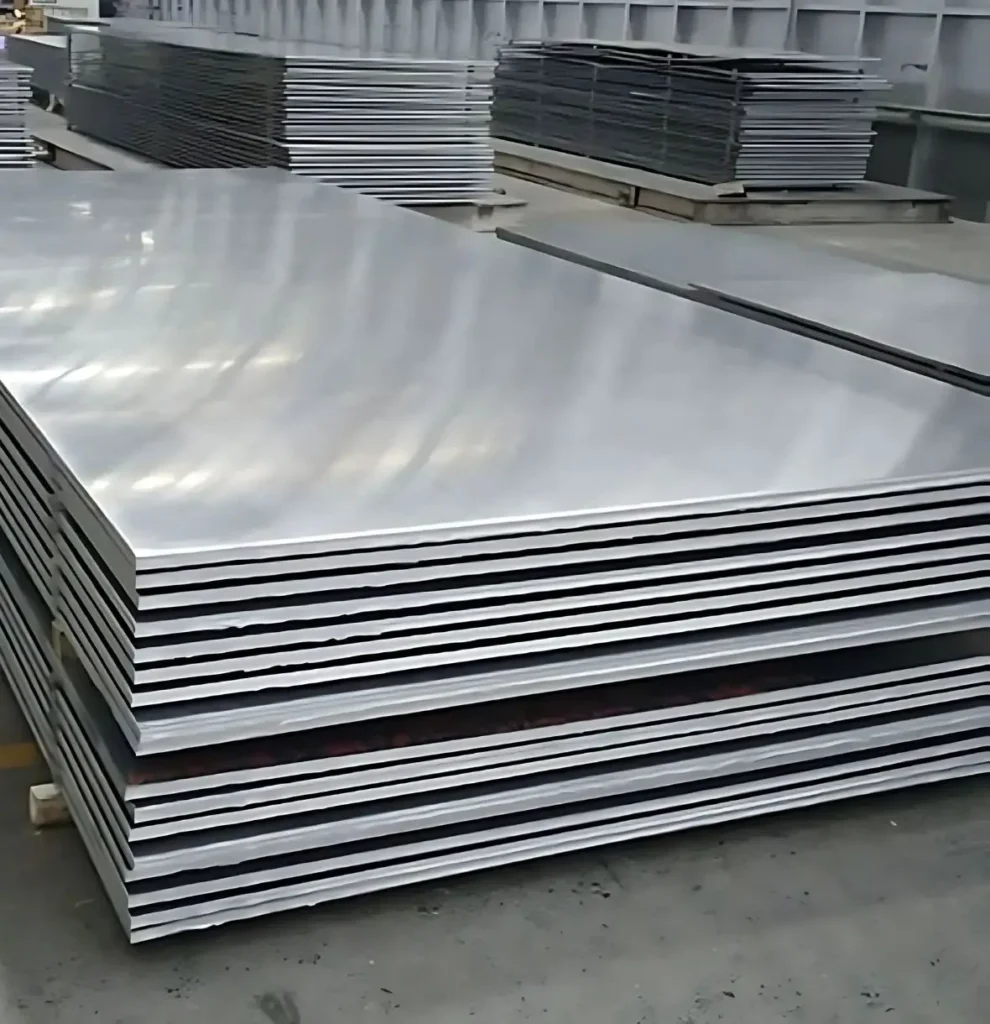
In the Indian steel industry, GP usually stands for Galvanized Plain sheet. This is a flat sheet of steel covered with zinc and has no corrugation or roof profile.
GP sheets are used in manufacturing processes that require a flat sheet of galvanized steel. They can have a variety of surface finishes, coating and forming features depending on the product specification.
A GP Sheet Supplier can be suitable for cutting, bending, punching and forming. However, it will depend on the grade of steel, thickness of the sheet, type of coating applied and manufacturing process.
Common Applications of GP Sheets
Electrical Enclosures: Used for the manufacture of specific electrical cabinets, control panels, and equipment housings.
Metal Cabinets: Used for cabinets, storage units, and other fabricated items.
HVAC: Used for specific ducting and ventilation components.
Appliance Components: Used for specific appliance housings and metal components.
Fabricated Panels: Used for covers, dividers and panels requiring galvanized steel.
Industrial Components: Used for products requiring flat galvanized sheet.
Not all GP sheets will be suitable for all forming/fabrication processes. Customers should ensure they know what grade, finish, thickness and coating they require before ordering.
Read More: GP Sheet Supplier | Shiva Steel Fabricator
GI Sheet vs GP Sheet: Key Differences
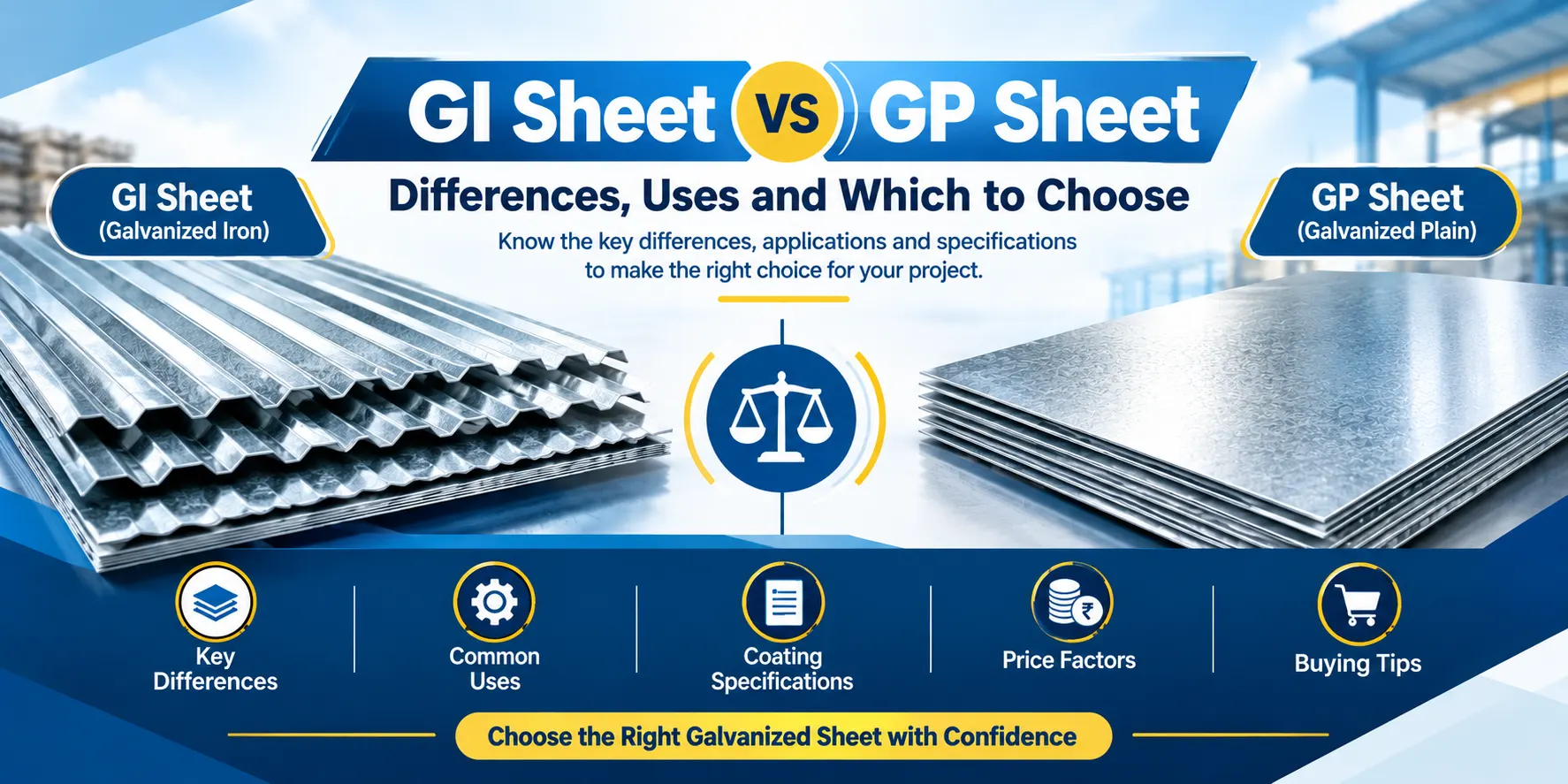
The main difference in common market usage is often the product form and intended application rather than a completely different base material. GI is a broad commercial term for galvanized sheet, while GP often refers specifically to galvanized plain sheet.
| Comparison Factor | GI Sheet | GP Sheet |
|---|---|---|
| Common meaning | Galvanized steel sheet: the term may cover different product forms. | Galvanized plain steel sheet |
| Surface form | May be plain, corrugated, or profiled, depending on the product | Generally supplied in flat, plain-sheet form |
| Coating | Zinc coating: specification varies by product | Zinc coating: specification varies by product |
| Common applications | Roofing, cladding, sheds, fabrication, and industrial uses | Fabrication, cabinets, enclosures, panels, and selected industrial components |
| Fabrication requirements | Depends on the grade, thickness, profile, and coating | Often selected for flat-sheet cutting, bending, and forming applications |
| Surface finish | Depends on finish and product type | Depends on the supplied grade and finish |
| Price | Depends on dimensions, coating, thickness, profile, and market conditions | Depends on dimensions, coating, thickness, grade, and market conditions |
| Selection criteria | Application, profile, structural requirements, and coating | Surface requirements, formability, coating, and manufacturing needs |
Important: These terms are not used consistently by every GI Sheet & GP Sheet supplier or dealer. Some suppliers may use GI and GP to describe overlapping product categories. Always confirm the exact product specification rather than making a purchase based on the name alone.
GI Sheet vs. GP Sheet: Understanding the Manufacturing and Coating
Generally speaking, GI Sheets and GP Sheets will be zinc-coated steels. However, you cannot always assume they will have different galvanizing treatments or that one will have a heavier coating. This will depend on the grade and type of product you are being supplied.
There are several factors to consider when comparing GI and GP:
1. Base Steel Grade
This can impact the strength of the material and whether it is suitable for forming or fabrication. If the product is going to be deeply drawn or bent multiple times, you might require a different grade.
2. Zinc Coating
The zinc coating will help protect the steel from corrosion. The specification of this coating will depend on the application, environmental exposure and what product standard it has. You can’t always assume a GI or GP will have a certain coating weight.
3. Surface Finish
If your product is going to be visible or painted, then you might want to consider the surface finish. Ensure the surface finish required has been confirmed by your supplier.
4. Thickness
This will affect the weight of the product, how easy it is to handle, its strength, and overall cost. Ensure you know what thickness is required and what tolerances apply.
5. Forming & Fabrication
If cutting, bending, punching, or forming is going to be carried out, this can affect the suitability of the sheet. Ensure you choose a grade and coating that will be suitable for the process. If you need tight bends or a good surface finish on your finished component, this should also be considered.
Read More: GP Sheet Dealer | Shiva Steel Fabricator
Which Is Better: GI Sheet or GP Sheet?
Neither GI nor GP sheets are always better. The correct sheet to choose will depend on your requirements.
Choose a GI Sheet When
- You require Galvanized steel
- You need plain/corrugated/profiled sheets
- The sheet will need to meet your specific requirements (dimensions, coating & installation/structural requirements).
You are looking for materials for sheds, warehouses, select fabrications, and general industrial uses.
If you are looking to use the material for roofing, then check if you need a plain sheet or a manufactured corrugated/profiled roofing sheet. The design of the roof, the number of supports, wind loads, fixing method, and requirement for drainage will help determine your choice.
Use a suitable GP sheet if:
- You have a requirement for flat sheet galvanized material.
- Cutting, bending, punching, and forming.
- If surface finish and dimensions are required to be consistent.
Selected electrical enclosures, cabinets, panels, equipment covers, etc., are being manufactured.
Ensure that you consider the steel type and forming characteristics for use in forming applications.
GI Sheet vs GP Sheet: Which Is More Cost-Effective?
The most economical choice will be the one that fits your specification and doesn’t have any unwanted extra costs from the base materials or manufacturing issues. A cheaper quote may not necessarily offer better value, it could be that the sheet thickness, coating, grade, and finish aren’t the same.
Factors affecting the cost of GI and GP sheets include:
Sheet Thickness – Thicker sheets will require more steel.
Zinc Coating – Different coating specifications will affect the price.
Grade of Steel – Depending on what grade of steel you need and how it will form.
Size, cut, bespoke sizes, and waste – How big your sheet is, bespoke sizes, cutting, and waste will all impact the cost of purchase.
Quantity – If you are ordering in bulk, there may be different terms available.
Delivery, handling, and tax—all of these will affect the cost you pay.
When comparing quotes, always ask for full specifications and the total delivery price. This will give a more accurate comparison between GI sheet and GP sheets.
How to Choose the Right GP or GI Sheet Distributor for Your Application
Before you order, search for a GP or GI Sheet Distributor, think about what you are going to use it for, and have a clear specification to reduce the chances of getting the wrong material.
1. Identify the End Application
This will determine what type of material you need, as different applications require different properties. Whether you are using it for roofing, cladding, ducting, fabrication, electricals, or something else.
2. Confirm the Required Thickness
Ensure you know the actual thickness required in mm. If there is an engineering requirement for your application make sure the correct thickness is chosen.
3. Check the Zinc Coating
Ensure you know what zinc coating is required. Ask for any relevant information on the product. The zinc coating requirements should relate to the environment it will be exposed to.
4. Select the Appropriate Steel Grade
If you are fabricating, bending and forming ensure you are using the correct steel grade. If you are using it for roofing and cladding, ensure the product spec meets the design requirements of your project.
5. Verify Sheet Dimensions
You will need to confirm the sheet size (width and length) and whether it needs cutting or profiling. This will help in ordering the right amount of material and also avoiding excess waste.
6. Compare Supplier Quotations
Use a reliable GI Sheet Supplier and make sure they have the same specifications. This means the same thickness, grade, coating, size, quantity and delivery. Ask questions if you are unsure about what specifications they have.
7. Review Quality Documentation
If needed, ask for any quality papers such as material test certificates, product identification or other relevant paperwork. When the material has been delivered make sure it is the correct item according to your purchase order.
What Should You Check Before Buying GI or GP Sheets?
When requesting a quote from a GI or GP Sheet supplier/dealer/Distributor please provide the following information:
Type of Product: Are you looking for GI plain, GI profile or GP
Thickness (mm): How thick do you require the material to be?
Steel Grade: What grade of steel is required?
Zinc Coating: What zinc coating do you require? To what standard?
Size: Width, Length and Cutting requirements?
Finish: What finish is required?
Quantities: How much do you require? How many sheets or what weight?
Delivery: Where to deliver? How long until required? Freight and unloading costs?
Documentation: Can you supply us with the relevant product specs and quality documentation?
Overall Cost: Overall cost including any taxes and freight.
By providing this information, it will make it easier for suppliers to give you an accurate quote and allows you to compare products easily.
Why Choose a Reliable GI Sheet Supplier?
Choosing a Trustworthy GI Sheet Supplier will ensure that they can explain what terminology relates to your product, what specifications they have available and a quotation that fits your requirements.
Before placing your order ensure:
Product Specifications – Can they explain whether they are providing you with plain, corrugated, profiled, GI or GP sheets?
Product Availability – They should have the correct thickness, size, grade and coating specifications for your application.
Clear Quotation – They should have a clear breakdown of what product you’re getting, how much, price, taxes and delivery terms.
Quality Certification – They should have the relevant certification and product documentation.
Stock Availability – Ensure they have the correct amount in stock and delivery timescales.
Specification Help – They should be able to help you understand the specifications. Structural and engineering decisions should be confirmed with the relevant professional for your project.
If you need galvanized steel for your construction, fabrication or industrial work, providing your GI Sheet Supplier in India with full material requirements will make the process easier.
Read More: GI Sheet dealer | Shiva Steel Fabricator
Conclusion
Understanding the difference between GI Sheets and GP Sheets will enable you to purchase the right type of galvanized steel for your application, production and budget. In simple terms GI sheet is used as a general term within the Indian market to describe various galvanized sheet products. GP sheet generally refers to Galvanized Plain Sheets. However, suppliers may also use these terms interchangeably when referring to their product.
When considering GI Sheet for Roofing applications, the profile, thickness, coating, design and installation should be considered. When considering GI Sheet for production, it is best to consider the grade of steel, finish, uniformity and forming requirements. Neither of the products are necessarily better than the other and depends on what you are looking for and what technical requirements there are.
Compare like-for-like specifications, check what quality information is available and work out what the total cost will be. Working with a trusted GI Sheet Supplier can help you understand what you need, what options are available to you and make a more informed decision.
Frequently Asked Questions
1. What is the difference between GI sheet and GP sheet?
GI can be an abbreviation for galvanised steel sheet but it will vary depending on the product. GP tends to refer to galvanised plain sheet. As there are many variations of terminology within the market it is always best to confirm with your supplier what type of product you will receive and what the specifications will be.
2. Is GP sheet the same as GI sheet?
Not always. GP usually refers to galvanised plain sheet, whilst GI is an overarching term for galvanised sheet products. It can sometimes vary depending on the GP Sheet Supplier, therefore, it is key to ensure you know what the product specifications will be.
3. Is GI sheet better for roofing?
It depends on what product you need. GI sheets are often supplied in corrugated or profiled format. GP tends to refer to plain sheet. It is important to know what profile you require for your roofing application.
4. Can GP sheets be fabricated?
Yes, the correct GP sheets can be used for fabrication such as select cabinets, enclosures, panels and components. Ensure you know what grade, thickness, coating and forming requirements you require.
5. Do GI and GP sheets have the same zinc coating?
Not necessarily. Specifications will vary from product to product and supplier to supplier. Ensure you know what coating weight or standard you will receive.
6. What affects the price of GI and GP sheets?
Prices can vary depending on the thickness, grade, zinc coating, size, finish, quantity, processing, market conditions, delivery and taxes.
7. How do I know what thickness to choose?
Dependent on your application, design requirements, loading requirements, fabrication and specifications. If you are using it for structural roofing applications then ensure you speak to your project engineer to confirm what you will need.
8. What should I ask my GI Sheet Supplier?
What type of product it is, what thickness it is, what grade of steel it is, what zinc coating it has, what size it is, what finish it has, how much you want, what quality documents you will receive, if they have stock, how long it will take to deliver, and what the overall delivery cost will be.